What the Maya Can Still Teach Modern Astronomy
Thousands of years before telescopes, cameras, or computers, the Maya became some of history’s most accomplished astronomers. Their observations shaped calendars, guided agriculture, and revealed patterns in the heavens that continue to fascinate scientists today.
Looking Up Without a Telescope
The Maya never built telescopes. They had no precision clocks, calculators, or computerized mounts.
Yet by watching the sky night after night, year after year, and generation after generation, they developed one of the most sophisticated astronomical traditions of the ancient world.
Today, when amateur astronomers align GoTo mounts with GPS satellites or image galaxies millions of light-years away, it is easy to forget that astronomy began with something much simpler: careful observation and an endless sense of curiosity.
That may be the Maya’s greatest lesson for us.
Key Takeaway
The Maya proved that patient observation, accurate record keeping, and curiosity can reveal extraordinary truths about the universe, even without advanced technology.
Masters of the Night Sky
The Maya carefully tracked the movements of the Sun, Moon, and visible planets. Over centuries, they learned to recognize repeating patterns that helped them anticipate important celestial events.
Their accomplishments included remarkably accurate observations of Venus, the recognition of eclipse cycles, identification of solstices and equinoxes, sophisticated calendar systems, and mathematical innovations that included an independent development of zero.
Rather than simply looking at the sky, Maya observers combined observation with mathematics and long-term record keeping. In that sense, their process feels surprisingly familiar to modern astronomers: observe, record, analyze, and predict.
💡 Did You Know?
The Maya independently developed a true place-value zero. That mathematical breakthrough was essential to their calendar calculations and remains fundamental to modern science and computing.
Venus: The Maya’s Favorite Planet
If one celestial object captured the Maya imagination more than any other, it was Venus.
Unlike the distant stars, Venus changes position dramatically throughout the year, alternating between its appearances as the Morning Star and Evening Star. The Maya tracked those changes with astonishing precision.
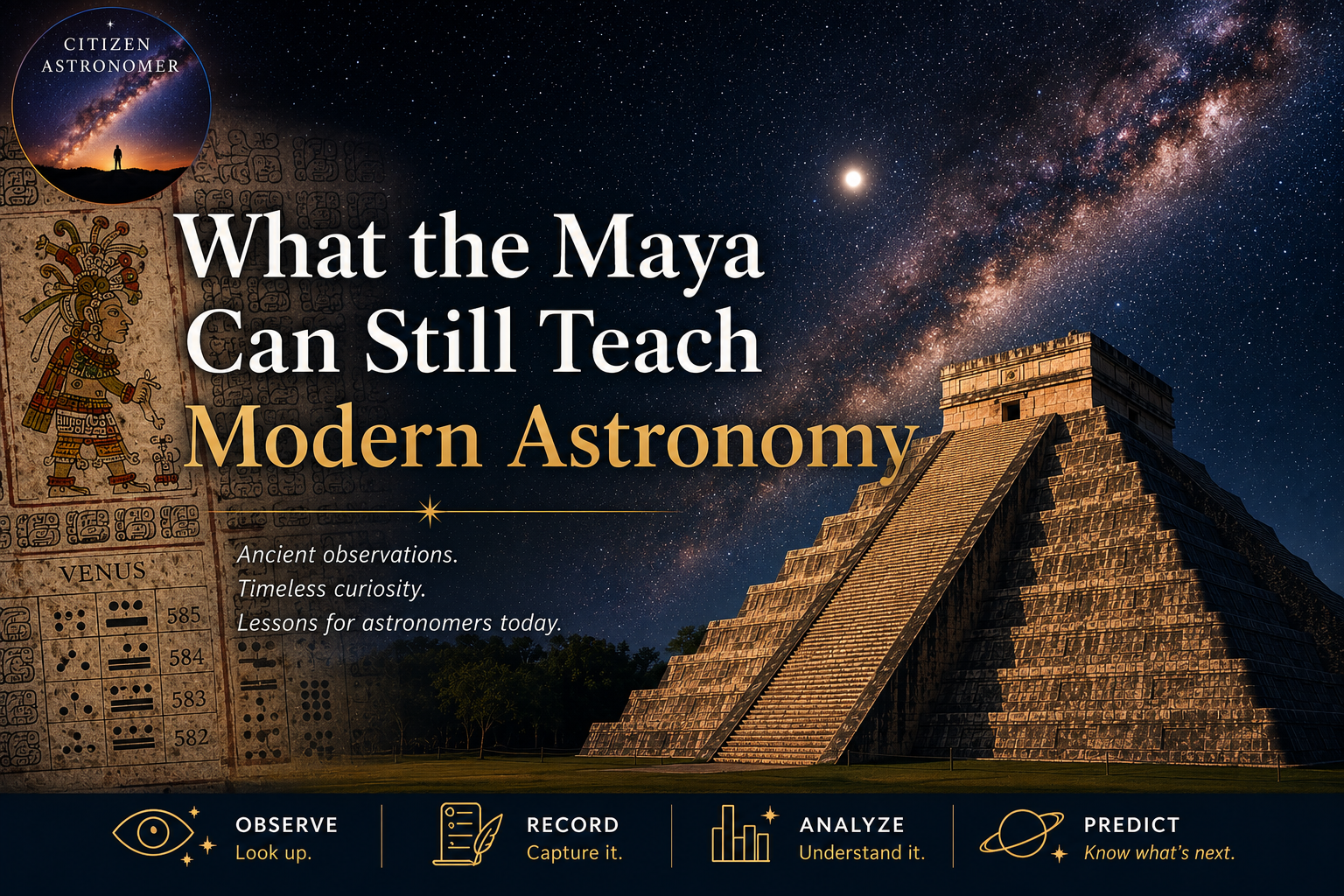
Their astronomical tables used a 584-day cycle for Venus, very close to its modern average synodic period. That is an extraordinary achievement considering every observation was made with the naked eye.
Many of these calculations survive in the Dresden Codex, one of only a few Maya books that escaped destruction after European contact.
Reading the Sky
Venus was not their only focus. The Maya also recognized larger patterns involving eclipses, the Sun, and the Moon.
Solar and Lunar Eclipses
By studying recurring patterns, Maya astronomers identified periods when eclipses were likely to occur. Their methods were not equivalent to modern orbital calculations, but they clearly understood that eclipses followed natural cycles rather than appearing at random.
Solstices and Equinoxes
The Maya monitored where the Sun rose and set throughout the year. Those observations helped them mark seasonal turning points important to agriculture, ceremony, and timekeeping.
Many Maya buildings were aligned with significant solar positions. Some famous sites also produce dramatic patterns of light and shadow near seasonal dates, though archaeologists remain cautious about assuming that every apparent alignment was intentional.
Lunar Cycles
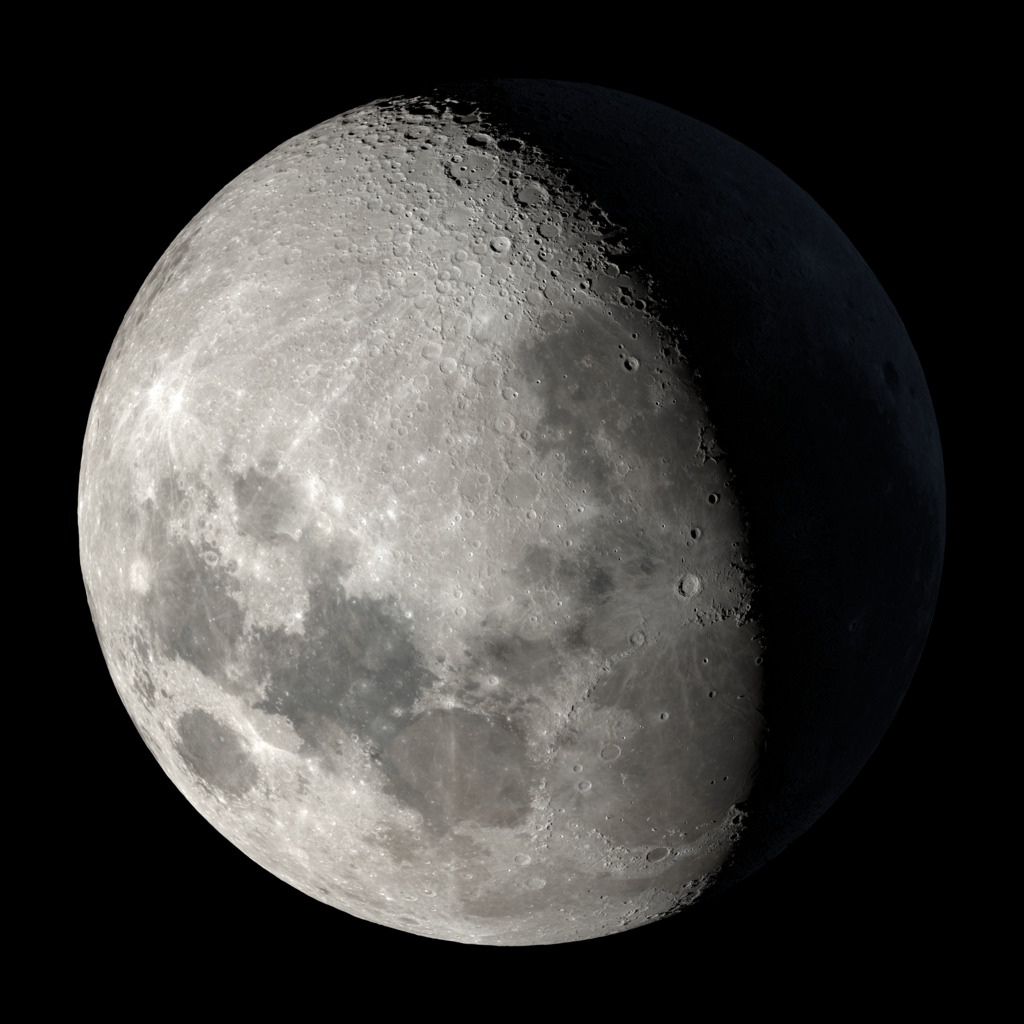
The Moon’s phases, the length of lunar months, and the timing of eclipse seasons were carefully recorded. Lunar observations became woven into Maya calendars and ceremonial life.
More Than Beautiful Buildings
One reason Maya archaeology continues to fascinate astronomers is that many structures were built with the sky in mind.
Temples were not simply places of worship. Some also served as monumental sight lines or seasonal markers, connecting architecture, landscape, and celestial events.
Standing at these sites today, it is difficult not to imagine ancient observers watching the same sunrise, Moon, and planets that we enjoy through modern telescopes.
A Calendar That Was Never About the End of the World
Perhaps no Maya topic has generated more misunderstanding than the year 2012.
Despite countless television specials and internet rumors, the Maya did not predict the end of the world. December 21, 2012 marked the completion of a major cycle in one correlation of the Long Count calendar.
A useful comparison is the transition from December 31 to January 1. One cycle ends, another begins, and the calendar continues.
Maya traditions often treated time as cyclical. The completion of a cycle could represent transition and renewal, not annihilation.
💡 Did You Know?
The famous “2012 doomsday prediction” came largely from modern popular culture and internet speculation, not from a Maya prophecy of global destruction.
Why the Maya Still Matter
Modern astronomy relies on giant observatories, orbiting telescopes, supercomputers, and spacecraft exploring the Solar System.
The Maya had none of those tools, yet they identified celestial patterns that still impress historians and astronomers today.
Their greatest contribution was not one isolated discovery. It was a demonstration of what human curiosity can accomplish when it is paired with patience, careful observation, mathematics, and a desire to understand the universe.
🌌 Citizen Astronomer Takeaway
Every time we step outside and look up, we participate in a tradition that stretches back thousands of years. The equipment has changed dramatically, but curiosity has not. The Maya remind us that astronomy begins not with technology, but with noticing the sky.
Further Reading
- NASA — Educational material on planetary motion, eclipses, and the history of skywatching.
- Smithsonian Institution — Articles on Maya civilization, archaeology, mathematics, and astronomy.
- The Dresden Codex — A surviving Maya manuscript containing calendar and astronomical tables.
- UNESCO World Heritage Centre — Background on Chichen Itza and other important Maya sites.
Have an astronomy question you would like to see featured in a future Citizen Astronomer article? Send it my way. There is always something new to discover when we look up.
Explore • Learn • Look Up.