What would we do if an asteroid was heading toward Earth?
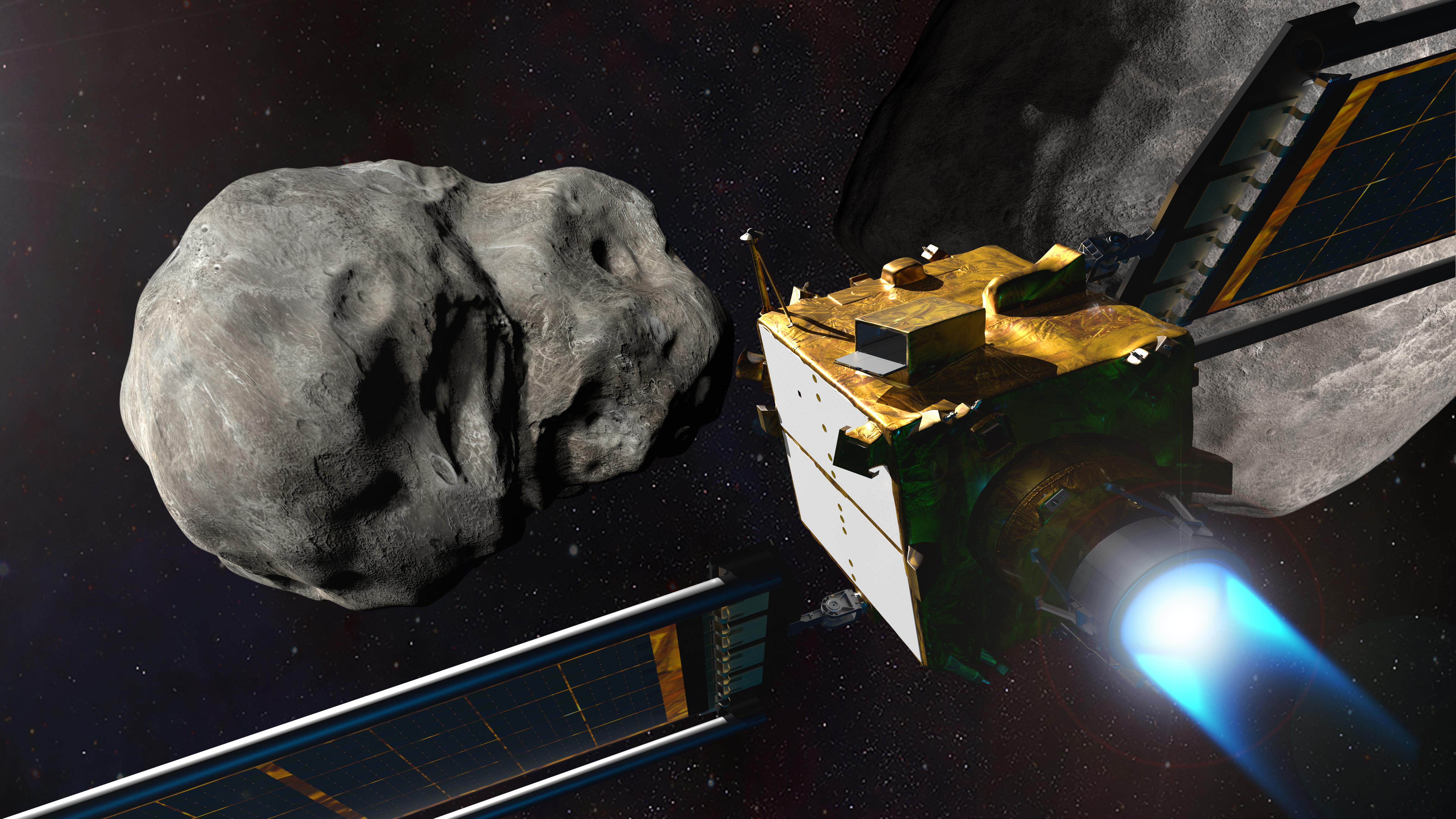
For a long time, that question lived in science fiction. But in 2022, NASA tested a real solution with the Double Asteroid Redirection Test (DART)—the first mission designed to change the motion of an asteroid.
Why Asteroids Matter
Asteroids are rocky leftovers from the formation of the solar system about 4.6 billion years ago. While most orbit safely between Mars and Jupiter, some cross Earth’s orbit.
Even relatively small asteroids can cause serious damage:
- Chelyabinsk (2013): A small asteroid exploded over Russia, injuring over 1,000 people
- Tunguska (1908): Flattened forests across a massive area
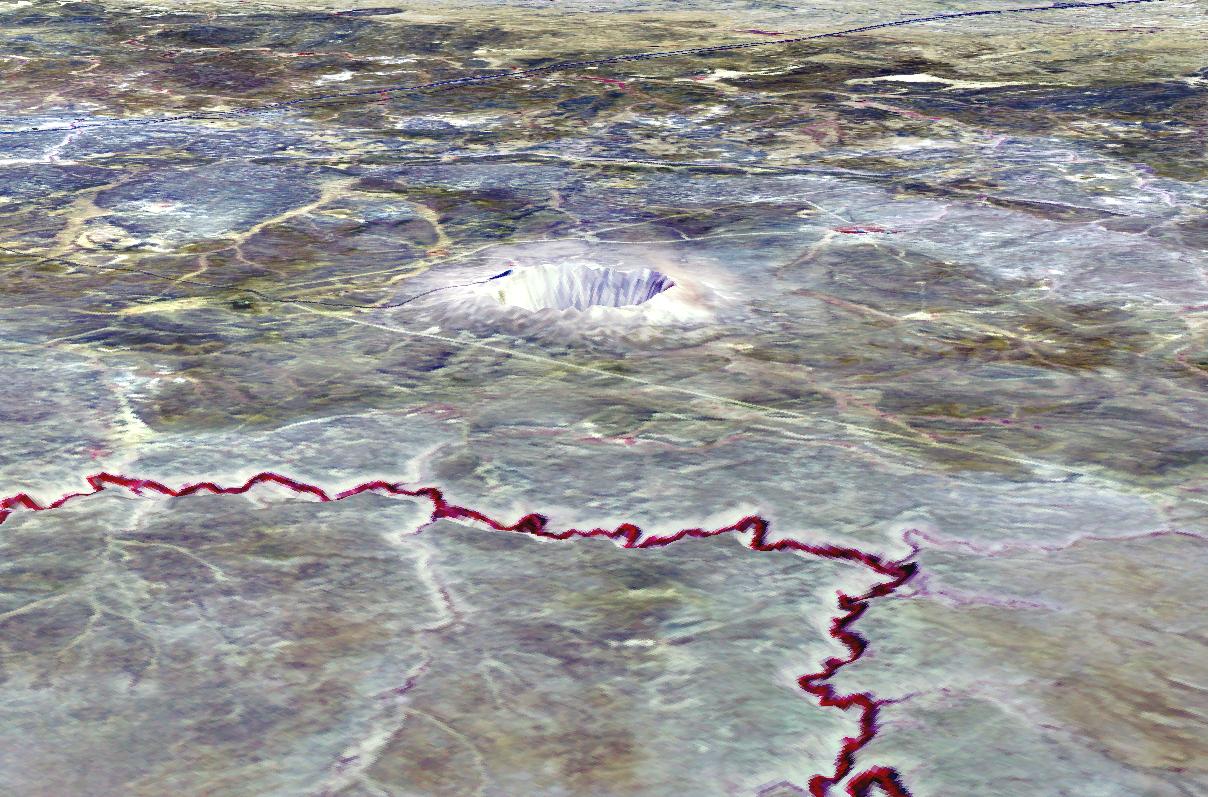
- Meteor Crater: A ~50-meter asteroid created a crater over 1 km wide
The Target: A Binary Asteroid System
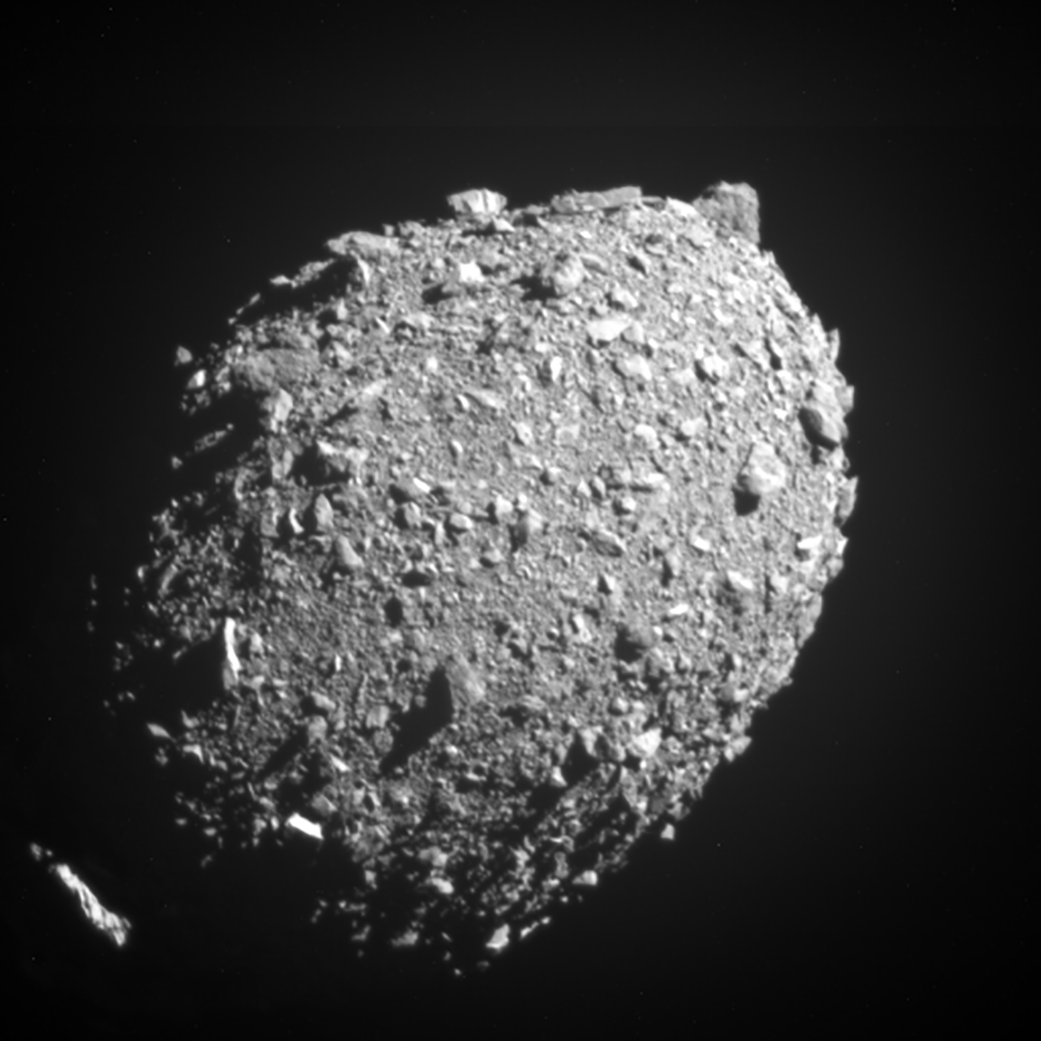
DART targeted a pair of asteroids known as Didymos and Dimorphos.
- Didymos – the larger asteroid (~780 meters wide)
- Dimorphos – a smaller moon (~160 meters wide)
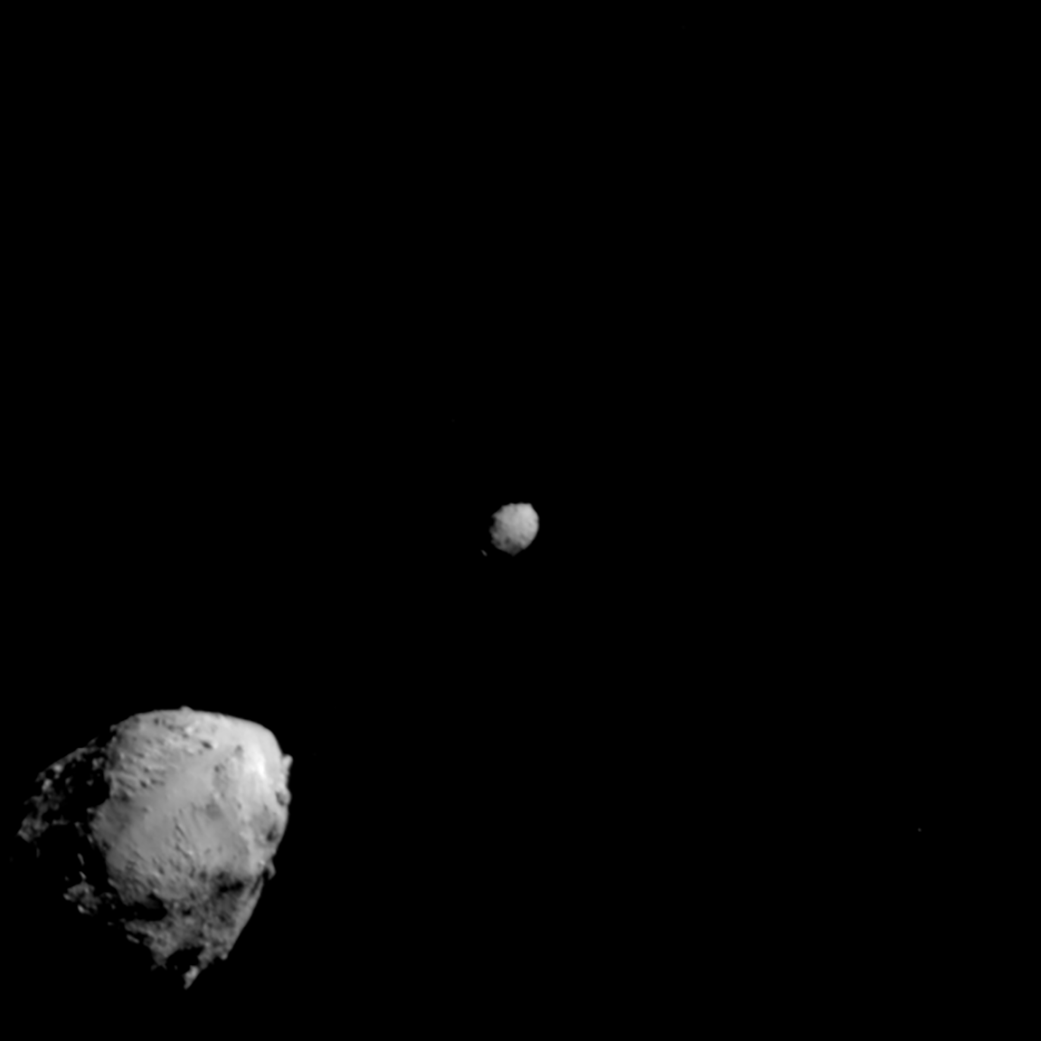
Dimorphos orbits Didymos, which made it possible to measure any change in its orbit after the impact.
How DART Worked
The concept behind DART was simple but powerful:
Crash a spacecraft into an asteroid to slightly change its path.
The spacecraft weighed about 1,500 pounds (676 kg) and struck Dimorphos at roughly 14,000 miles per hour.
In its final moments, DART used an onboard camera and autonomous navigation system to guide itself directly into the asteroid.
The Impact
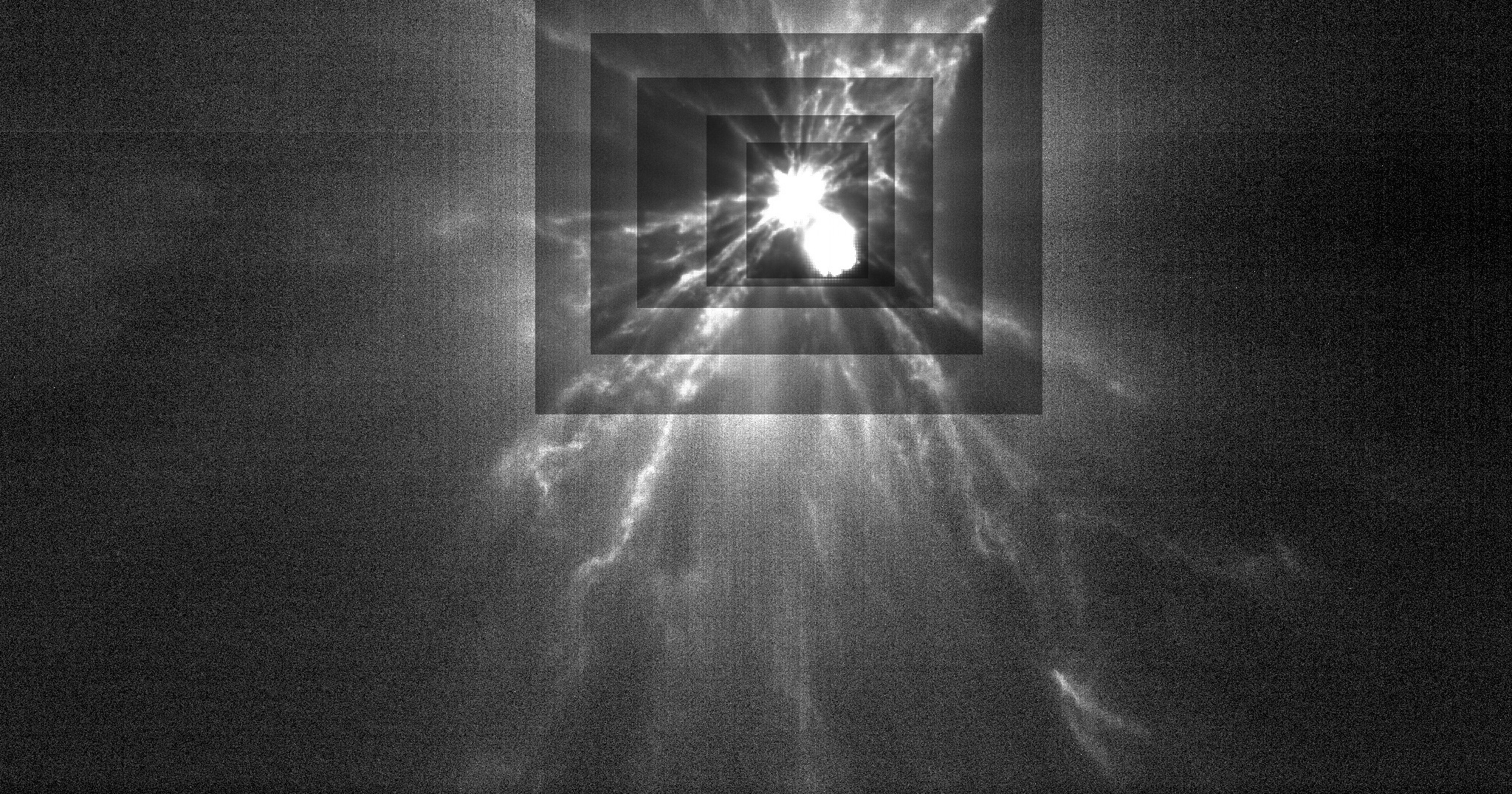
On September 26, 2022, DART successfully impacted Dimorphos.
The collision blasted a huge amount of material into space, forming a long, comet-like tail stretching tens of thousands of kilometers.
Did It Work?
Yes—and even better than expected.
- Expected orbital change: at least 73 seconds
- Actual change: 33 minutes
This proved that a spacecraft can measurably alter the motion of an asteroid.
Why This Matters
If we discover a hazardous asteroid early enough, even a tiny change in its speed can cause it to miss Earth entirely.
DART showed that planetary defense is not science fiction—it’s something we can actually do.
Final Thoughts
DART represents one of the most important milestones in modern space science.
For the first time, humanity has changed the motion of a natural object in space—and that capability could one day protect our planet.
As a NASA Solar System Ambassador, my goal is to bring missions like DART to the public—because understanding space is the first step toward protecting Earth.